


Grandius
Ajouter un avis SuivezVue d'ensemble
-
Date de création juillet 15, 2008
-
Secteur Logistique / Transport
-
Offres d'emploi 0
-
Consultés 110
Company Description
Vermont Housing Improvement Program 2.0

If you need information about VHIP awards approved before 2024, please describe our initial VHIP page. The preliminary VHIP funding was sourced from State Fiscal Recovery Funds, which had different guidelines. The requirements and options outlined here do NOT apply to jobs approved before March 25, 2024.
The Vermont Housing Improvement Program (VHIP) is relaunching as VHIP 2.0!
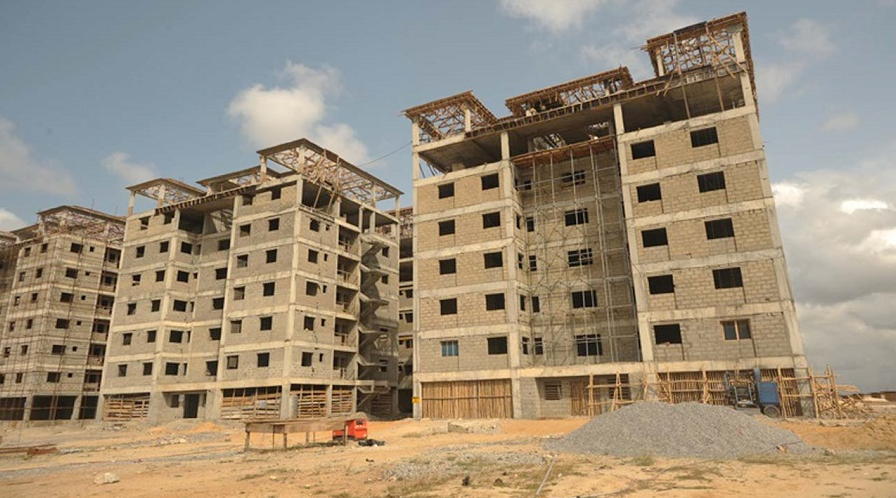
Drawing from insights got over the past 3 years and more than 500 units moneyed, this upgraded program keeps our dedication to broadening budget friendly housing. VHIP 2.0 now provides awards for restricted new building. Additionally, it introduces a 10-year forgivable loan alongside the existing 5-year grants, aiming to further incentivize property owners. This new alternative requires leasing units at fair market value without the need for referrals from Coordinated Entry Organizations.
Table of Contents:
What can you finish with VHIP 2.0 funding?
How much funding are jobs eligible for?
What are the program requirements?
5-Year Grant Versus 10-Year Forgivable Loan
VHIP 2.0 Documents Resource Guide for Residential Or Commercial Property Owners
Fair Market Rent (Recertification).
FAQ’s.
Recertification.
VHIP Recipient List
Resource Guide for Residential Or Commercial Property Owners Program Stats
What can you finish with VHIP 2.0 financing?
VHIP 2.0 uses grants or forgivable loans to:
Rehabilitate existing uninhabited units.
Rehabilitate structural elements effecting multiple systems, such as the roof of a multi-family residential or commercial property.
Develop a new Accessory Dwelling Unit (ADU) on an owner-occupied residential or commercial property.
Create brand-new systems within an existing structure.
Create a new structure with five or fewer domestic units.
Complete repairs essential for code compliance in occupied systems (only eligible for ten years forgivable loan)
Rehabilitation tasks can include updates to fulfill housing codes, weatherization, and availability enhancements, of qualified rental housing units.
How much funding are projects qualified for?
Based on the type of job, residential or commercial property owners are qualified to get approximately:
$ 30,000 per system for rehab of 0-2-bedroom units.
$ 50,000 per unit for rehab of 3+ bedroom systems, structural aspects affecting numerous units *, new unit creation, or development of Accessory Dwelling Units (ADUs)
* Structural repair grant or loan awards are available for an optimum of $50,000 per award made for a residential or commercial property. For each structural award made, a rent-ready system in the same structure need to be encumbered with a VHIP Covenant or FLA/Promissory Note. Contact your HOC or DHCD for more details and to discuss your project if you are thinking about structural repairs that affect more than one system.
What are the program requirements?
Program Match: All individuals are needed to offer a 20% match of the award, the alternative for an in-kind match for unbilled services or owned materials. For example, an individual who gets an award of $50,000 will be required to supply a $10,000 match.
Fair Market Rent: Participants are also needed to sign a rental covenant consenting to charge at or listed below HUD Fair Market Rent (FMR) or voucher quantity for the length of the agreement (5 or 10 years, discover more about these choices here). Participants will be required to submit an annual recertification type to guarantee they are in compliance with the program requirements. To compute HUD FMR for your location, have a look at our resources on Fair Market Rent.
Landlord Education: VHIP 2.0 candidates need to see a Landlord-Tenant Mediation video and complete a Fair Housing Training as part of the application procedure. The Landlord-Tenant Mediation video is supplied by the Vermont Landlord Association (Please click on this link to see). The online, self-paced Fair Housing training is offered by CVOEO. It consists of an introduction of state and federal anti-discrimination requirements, examples of unlawful housing discrimination and possible charges, access requirements for people with impairments, including sensible accommodations and sensible modifications, and best practices for housing service providers. This training will be verified through completion of a brief test. Please click on this link to sign up. You will be asked to develop an account on the Ruzuku finding out platform, then you’ll have immediate access to the training. If you experience any issues or have questions, please contact CVOEO at classcoord@cvoeo.org or 802-660-3455 ext. 205.
Tenant Selection: VHIP 2.0 participants can choose their occupants. However, the tenants they select must fulfill the program requirements, based upon if they are enrolled in the 5- or 10-year system (click on this link to get more information). For residential or commercial properties registered in this program, the residential or commercial property owner may not require a credit report greater than 500, and individuals are restricted to charging no more than one month’s lease for a deposit, no matter whether it is called a down payment, a damage deposit or an animal deposit, last month’s rent, and so on. Additionally, residential or commercial property owners should cover the expense of running background checks on possible renters. Residential or commercial property owners are also needed to accept any housing coupons that are offered to pay all, or a part of, the renter’s rent and energies. Additionally, residential or commercial property owners should accept paper applications for tenants with limited internet access.
Out-of-State Owners: Out-of-State owners are needed to determine a residential or commercial property manager situated within 50 miles of the systems to ensure a regional, responsible party can manager the residential or commercial property in the absence of the residential or commercial property owner.
5-Year Grant Versus 10-Year Forgivable Loan
The main distinction between the 5-year grant and the 10-year forgivable loans are:
– The period for which the residential or commercial property owner need to charge at or listed below HUD Fair Market Rent for the enrolled units (5 v 10 years).
The 5-year grant choice includes additional occupant choice requirements to lease to a home exiting homelessness
To find out more specifics about these 2 options, examine the areas listed below.
5-Year Grants
Any residential or commercial property, with the exception of tenant occupied units resolving code non-compliance problems, requesting VHIP 2.0 can choose to get a 5-year grant. This compliance duration will start as soon as the VHIP 2.0 system is placed in service. This grant requires that:
The unit is rented at or listed below HUD Fair Market Rent for the area for a minimum of 5 years.
That the residential or commercial property supervisor work with Coordinated Entry Lead Organizations to find suitable renters exiting homelessness for a minimum of 5 years or with USCRI to find refugee families to lease the system to
Participants must sign a rental covenant to this impact. This covenant will be efficient for 5 years and states that for this duration, the system should remain a long-lasting leasing with a month-to-month rental rate at or below HUD Fair Market Rent and that the Department of Housing and Community Development must authorize the sale of the residential or commercial property.
Tenant Selection: If the Department of Housing and Community Development (DHCD) or the Homeownership Center (HOC) that issued the grant determines that a home leaving homelessness is not available to rent the unit, the property manager shall rent the system to a home with an earnings equivalent to or less than 80 percent of area typical earnings. If such a family is unavailable, the residential or commercial property owner may rent the system to another household with the approval of the DHCD or HOC.
Grant to Loan Conversion: A landlord might convert a grant to a forgivable loan upon approval by DHCD and the HOC that authorized the grant. When the grant is converted to a forgivable loan, the residential or commercial property owner shall get a 10% credit for loan forgiveness for each year in which the property manager takes part in the grant program. For example, if the residential or commercial property owner took part in the grant program for 2 years prior to transforming to a forgivable 20% of the funding will be forgiven, and the forgivable loan terms would make an application for 8 years.
Note. This only uses to tasks that got financing through VHIP 2.0. The initial VHIP financing was sourced from State Fiscal Recovery Funds, which had various guidelines. The requirements and options described here do NOT use to tasks authorized before March 25, 2024, and those grants can NOT be converted to forgivable loans.
10-Year Forgivable Loans
Any residential or commercial property making an application for VHIP 2.0 can choose to get a 10-year forgivable loan. This compliance duration will start when the VHIP 2.0 system is placed in service. This grant requires that the system is leased at or below HUD Fair Market Rent for the location for a minimum of 10 years. The owner should lease the unit for 10 years at or below FMR to be forgiven in its whole. Funds will need to be repaid to the State of Vermont for every year this requirement is not fulfilled i.e. if an owner just leases the system for 7 years at or listed below FMR, 3 years (30%) of financing will not be forgiven.
VHIP Documents
General Documents
VHIP 2.0 Resource Guide for Residential Or Commercial Property Owners – This thorough guide strolls residential or owners through every action of the VHIP 2.0 procedure, from identifying if the program is an excellent suitable for your task, how to apply, payment disbursement, keeping program requirements, to offering a VHIP 2.0 residential or commercial property.
VHIP 2.0 Recipient List – The identity of VHIP receivers and the quantity of a grant or forgivable loan are public records and are released quarterly on this site.
Since there are numerous project types VHIP 2.0 assistances, the Frequently Asked Questions (FAQs) are specific to the kind of project making an application for funding. To ask concerns about your task, get in touch with your regional homeownership center.
Rehabilitation or Conversion of Unoccupied Units
Accessory Dwelling Units
New Unit Creation (within a brand-new structure).
Rehabilitation of Occupied Units
Fair Market Rent & Recertification
All residential or commercial property owners taking part in VHIP 2.0 are needed to charge rents at or listed below HUD Fair Market Rent (FMR) for the length of the contract, depending on whether the residential or commercial property owner selects the 5-year grant or 10-year forgivable loan alternative. FMRs routinely published by HUD represent the cost of leasing a moderately priced home system in the local housing market.
Fair Market Rent Calculator – To utilize the calculator, you should complete the utility worksheet, which suggests which energies the occupant is accountable for payment. Once the energy worksheet is complete, the calculator will show the optimum permitted rent based on the county the system is situated in and the variety of bed rooms.
Fair Market Rent Recertification Form – Residential or commercial property owners taking part in VHIP 2.0 should send a yearly recertification kind to guarantee they comply with the program requirements, consisting of FMR. While the program requirements are in impact, residential or commercial property owners will receive a yearly request to finish the recertification type. Residential or commercial property owners are motivated to proactively complete this form upon turnover or lease renewal.
If you require assistance finishing the recertification kind or figuring out FMR for your location, please contact your regional Homeownership Center or the State Housing Division (VHIP@vermont.gov).
More Questions?
As this program matures, the Department is working to increase ease of access and answer eligibility questions. Additional details and answers to regularly asked concerns will continue to be posted to this website as offered. Click here to join our e-mail list and stay up to date on Vermont Housing Improvement Program 2.0 updates and news.